Mahjong
CanaryDroidPuzzle
4.875.54K Reviews
- Version
- 1.7.2
- Installs
- 10.00M
- Age Rating
- Everyone
Screenshots
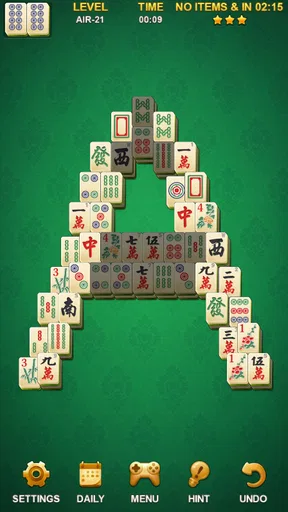
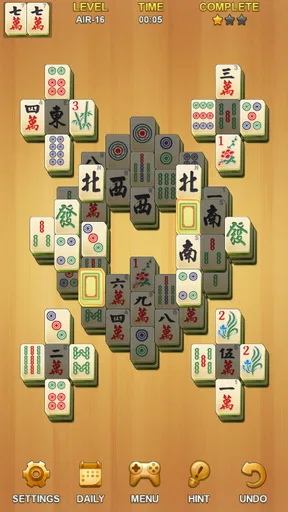
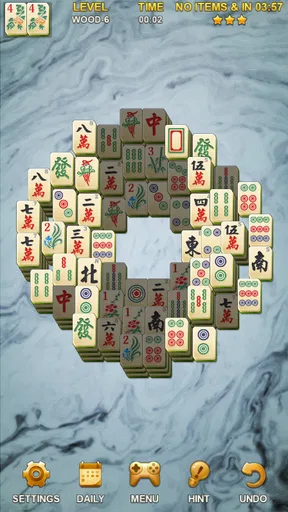
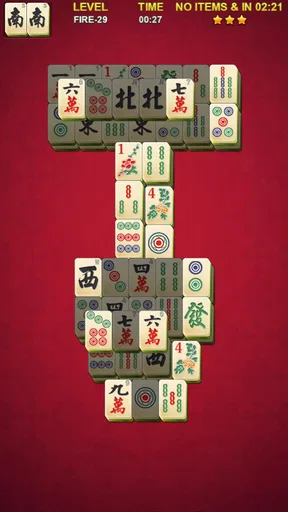
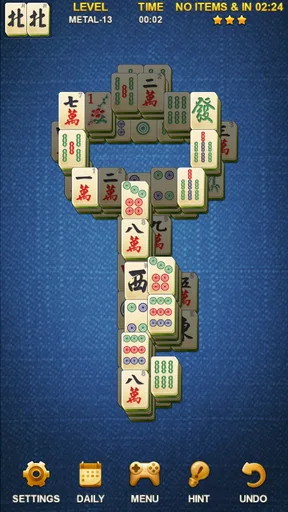
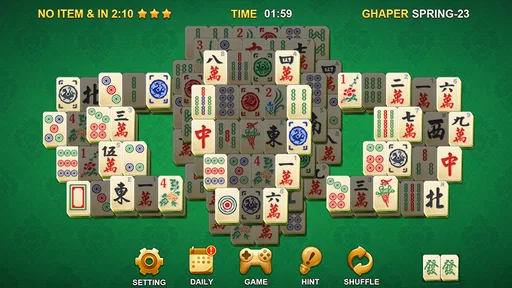
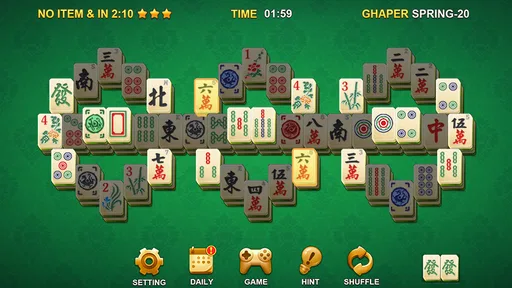
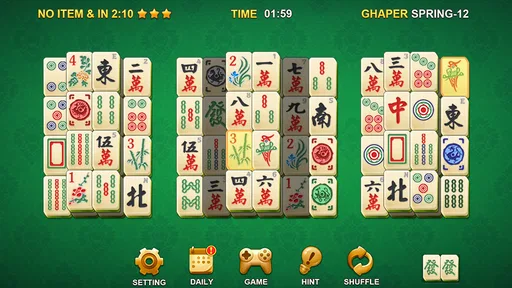
Our Review of Mahjong
 Analysis by Appyee
I approached Mahjong expecting a familiar tile-matching pastime, and that is exactly where its appeal begins. This is a free puzzle game from CanaryDroid built around Mahjong Solitaire: clear the board by pairing open, identical tiles until the layout is gone. It does not try to turn the classic idea into a story-driven adventure or a complicated strategy system. Instead, it focuses on the quiet satisfaction of spotting a match, making a safe choice, and gradually exposing the tiles underneath.
That simplicity makes it easy to recommend for short breaks. I can pick it up while waiting, play a little longer when I have time, and understand the objective immediately without reading a long tutorial. At the same time, the familiar rules hide a useful layer of planning. A move can look correct and still leave the board in a difficult position if it removes the wrong tile first. The game works best when I treat each layout as a small exercise in observation rather than as a race.
It is available at no cost and carries an Everyone age rating, so it is a broadly accessible choice for casual puzzle fans. The current version is 1.7.2 and it requires Android 6.0 or later. The large audience is also easy to understand: the game has passed ten million installs, with an average rating of 4.8 from roughly 480 thousand ratings. Those figures do not replace personal experience, but they do fit what I found: this is designed as an approachable, repeatable board game rather than a niche experiment.
A calm visual language built around the board
The most important visual decision is that the tiles remain the center of attention. Mahjong Solitaire depends on recognizing symbols quickly, comparing shapes, and noticing which pieces are free to select. A busy setting would work against that. Here, the board itself supplies the visual language: layered tiles create depth, exposed spaces show progress, and every successful pair makes the remaining arrangement easier to read.
I like this restraint because it gives the game a coherent mood without distracting from the puzzle. The setting feels more like a clean tabletop session than a dramatic fictional world. There is no need for a character to explain what I should do, and there is no elaborate narrative competing with the symbols. The visual design communicates through position and availability: a tile on the edge can be useful, while a matching tile buried beneath others may need to wait.
That clarity becomes especially valuable on a phone. Small screens can make tile games uncomfortable when symbols are cramped or when decorative elements dominate the display. I found that the best way to play is to pause for a moment before touching anything, scan the exposed tiles, and identify pairs that open new paths. The game rewards this slower visual rhythm more than frantic tapping.
There is also a subtle difference between recognizing a pair and recognizing a good pair. If two identical tiles are both available, removing either one may appear equivalent, but their positions can affect what becomes accessible next. I recommend looking for the match that frees a wider section of the layout or reduces a stack that is blocking several other pieces. This is one of the first useful habits to develop, and it gives the straightforward rules more depth than the short description suggests.
Why the classic presentation still works
Mahjong Solitaire has a strong advantage over many puzzle games because its board is immediately legible. I do not need to learn a fictional alphabet, memorize a collection of power-ups, or understand a complicated progression screen. The symbols are the content, and the arrangement is the challenge. That makes the game suitable for someone who wants a traditional puzzle rather than a heavily decorated mobile experience.
The trade-off is that players looking for a strong sense of place may find the presentation modest. The game’s mood comes from concentration, order, and the gradual clearing of the board, not from exploration or a changing world. If I want a game with characters, narrative scenes, or a dramatic visual journey, this is not the right choice. Its confidence comes from staying close to the tabletop puzzle format.
For me, that focus improves replayability. Since the board is not asking for emotional attention, I can play while taking a quiet break and let the pattern-recognition work become the main activity. It is a good fit for people who enjoy visual sorting and careful decisions, but less suitable for anyone who needs constant novelty to remain engaged.
Sound, pacing, and the feeling of a short session
The game’s pacing is naturally controlled by the player. There is no need to rush through a board, and the most satisfying sessions come from taking time to inspect the available moves. That creates a gentle rhythm: scan the layout, choose a pair, watch the board open up, then reassess. The pause between moves is not wasted time; it is where the puzzle actually happens.
This rhythm makes the game useful in everyday situations. I can imagine playing a board during a commute, while waiting for an appointment, or at the end of the day when I want something more active than scrolling but less demanding than a competitive game. A realistic session might begin with the intention of making only a few moves, then continue because one newly exposed area suggests a promising route. The game supports that gradual involvement without requiring a large uninterrupted block of time.
The sound design, where present during play, should be understood as support rather than the main attraction. The board’s visual feedback carries most of the information, while the audio helps mark actions and gives a little weight to successful matches. I would not choose this title for an elaborate musical experience. Its strength is the quiet, focused atmosphere created when sound does not overwhelm the act of examining the tiles.
That restraint also means the game can work well in situations where I prefer a low-key mobile activity. I can keep the volume modest and still understand the board because the core feedback is visual. It feels closer to handling a physical puzzle on a table than to entering a loud arcade environment. Players who depend on energetic music or rapid audiovisual rewards may find the presentation too subdued, but that calmness is precisely what makes it comfortable for repeated short sessions.
Using the pace to avoid careless mistakes
My most useful approach is to separate recognition from action. First, I look across the board and count the obvious open pairs mentally. Then I identify which pair seems to release the most useful space. Only after that do I tap. This small pause prevents the common mistake of removing the first available match and later discovering that a more important tile was left trapped.
When several choices seem equally safe, I prefer the move that reduces a tall or crowded area. Clearing a broad layer can reveal more information than removing two isolated tiles. I also avoid assuming that a visually attractive pair is automatically the best one. The deeper question is always what the board will look like after the match, not just whether the current match is legal.
This is where the relaxed pacing becomes a mechanical advantage. The game does not need to be played like a reflex challenge. I can use the quiet mood to inspect the consequences of each move, which makes the experience more thoughtful and gives even a short board a clear beginning, middle, and end.
How the atmosphere supports the mechanics
At its core, this is a puzzle about access. A tile is useful only when it can be selected, and a match matters because it changes which pieces become available. The atmosphere supports that idea by keeping attention on layers, openings, and empty spaces. Every cleared pair is both a small reward and a change to the problem in front of me.
I especially appreciate that the game does not need elaborate rules to create meaningful choices. The challenge comes from board reading. I have to notice which tiles are exposed, remember where matching symbols are located, and decide whether to act now or preserve a useful option. That is a different kind of thinking from a falling-block puzzle or a match-three game, where speed and chain reactions often dominate.
Compared with a typical match-three alternative, this feels slower and more deliberate. There is less emphasis on creating cascades and more on managing information. Compared with a word puzzle, it asks less from vocabulary and more from visual memory. Compared with a competitive online puzzle, it offers no pressure from another player. Those differences make it a better choice when I want a self-contained activity, though someone seeking constant goals, social comparison, or fast escalation may prefer another category.
The main mechanical friction is that the classic format can become mentally repetitive. The basic action remains pairing tiles, so enjoyment depends on whether I like gradually improving my reading of the board. I would not describe it as a game that constantly surprises me with new systems. Its variety comes from the arrangement and from my own decisions, which is enough for a fan of Mahjong Solitaire but may feel limited to players who expect frequent new mechanics.
A practical way to approach difficult layouts
When a board begins to feel blocked, I try not to search randomly for any pair. I first look for tiles that are limiting access: pieces covering several others, or pieces occupying a narrow opening where one removal could change the whole layout. This creates a useful priority order. Open the board first, then worry about clearing convenient pairs.
I also pay attention to pairs that are easy to overlook because the symbols are similar in size or surrounded by more noticeable tiles. A quick scan from the outside toward the center helps me avoid focusing only on the most obvious pieces. This is a small technique, but it changes the experience from tapping at random into a repeatable solving routine.
For a casual player, the best goal is not necessarily to finish every board as quickly as possible. I get more from treating each move as a test of the layout. If I make a poor choice, I can learn which area became restricted and adjust my priorities in the next attempt. That makes the game useful as a concentration exercise without pretending to be a formal training tool.
Who will enjoy it, and who should look elsewhere
I would recommend this game to someone who likes traditional board puzzles, visual matching, and calm sessions that can be stopped and resumed easily. It is also a sensible option for a player who finds many mobile puzzle games too noisy or too dependent on timers. The Everyone rating and free entry point make it easy to try, while the familiar rules mean a new player can begin without much preparation.
It can also suit people who enjoy a small daily routine. One practical use is to play a board during a short break, focusing on careful scanning rather than trying to maximize speed. Another is to use it as a wind-down activity when a competitive game would feel too intense. The visual structure gives the mind something concrete to organize, and the gradual clearing of the board provides a clear sense of progress.
I would suggest skipping it if you need a story, a strong cast of characters, or a changing campaign. It is also not ideal if you want real-time competition, deep strategic systems, or a steady stream of dramatic rewards. A match-three game will be better for rapid chains and immediate spectacle; a word game will be better for language-based challenge; and a narrative puzzle game will be better if atmosphere must come from setting and plot rather than from the board itself.
Another consideration is patience. The game’s best decisions are often quiet ones, and the reward may be a cleaner position rather than an obvious burst of excitement. If that sounds satisfying, the restrained presentation becomes a strength. If it sounds slow, the same design may feel plain after a few sessions.
Installation, accessibility, and everyday suitability
Because it is free and supports Android 6.0 or later, the technical entry point is friendly for many Android users. I would still check that a device has enough comfortable screen space to distinguish the tiles easily, especially if the player prefers larger text or has difficulty comparing small symbols. The game’s central task is visual, so screen comfort matters more here than it might in a game built around large buttons.
The current version, 1.7.2, is worth noting when checking compatibility before installing. Once running, the important question is less about learning controls and more about whether the board remains readable during longer sessions. I find that short play periods are the natural fit: they preserve the calm concentration without letting the repeated matching pattern become tiring.
Its popularity is substantial, with more than ten million installs and about seventy-six thousand written reviews. I see that as evidence that the format has broad reach, not as a promise that every player will enjoy it. Mahjong Solitaire is inherently specific in its appeal. The game succeeds when its audience wants exactly this kind of focused tile puzzle.
My verdict on the overall mood
After spending time with it, I see the game’s strongest achievement as its consistency. The art direction keeps the board readable, the sound remains secondary to the act of solving, and the pacing gives each move room to matter. Nothing feels disconnected from the central idea of clearing layered tiles. Even the quiet atmosphere has a mechanical purpose: it encourages me to observe before acting.
That coherence is more valuable than a long list of extra features would be. The game knows that Mahjong Solitaire can hold attention through pattern recognition, risk management, and the pleasure of exposing a clean path through a crowded layout. I enjoy it most when I have a few uninterrupted minutes and want a puzzle that asks for thought without demanding stress.
There are limits, and I would not hide them. The presentation is deliberately modest, the core action can feel repetitive, and players searching for narrative or competitive energy should choose another game. It is also the kind of title whose depth depends on the player’s willingness to study the board. If I rush, it becomes a sequence of taps; if I slow down, it becomes a compact exercise in planning.
For my recommendation, I would put it this way: choose it if you want a free, accessible Mahjong Solitaire puzzle with a calm tabletop mood and rules that are easy to understand but rewarding to refine. The developer, CanaryDroid, has kept the focus where it belongs, and the high average rating of 4.8 reflects how well that straightforward approach connects with its audience. The best reason to play is not spectacle, but the satisfying change from a crowded board to a clear one.
In the end, I would gladly keep it available for waiting rooms, quiet evenings, and those moments when I want to concentrate on one small problem at a time. It will not replace a story-rich game or a more varied puzzle collection, but within its chosen lane it creates a clear, comfortable, and genuinely playable mood. That focus is exactly why I would recommend it to a friend who enjoys classic tile puzzles and prefers thoughtful pacing over constant noise.
Verdict
Strengths of Mahjong
- Easy-to-learn rules make it suitable for beginners.
- Relaxing gameplay can help pass time without requiring fast reactions.
- Multiple layouts and tile patterns add variety to each session.
- Offline play is useful when traveling or without an internet connection.
- Hints and undo options make difficult puzzles less frustrating.
Limitations of Mahjong
- Some puzzles may feel repetitive after extended play.
- Ads can interrupt gameplay in the free version.
- Advanced layouts may be challenging for casual players.
- Undo and hint features can reduce the sense of achievement.
- Small tiles may be difficult to read on compact phone screens.
Other Releases by CanaryDroid
View All


Similar Picks in This Category
View All
Block Blast!
HungryStudio4.8

Braindom: Brain Games Test
Lahana Game Studio4.6

AMAZE!
CrazyLabs LTD4.6

Sudoku - Classic Sudoku Puzzle
Oakever Games4.7

Art Puzzle - Puzzle Games
Easybrain4.8

Amaze GO!
Oakever Games4.9
Frequently Asked Questions
What is Mahjong, and how does the app work?
Mahjong is a tile-matching puzzle game based on the traditional Chinese game, although most mobile versions use a solitaire-style format. You usually remove pairs of identical, available tiles from a layout until the board is cleared. The app typically includes multiple levels, different board designs, hints, reshuffling options, and gradually increasing difficulty for both casual players and experienced puzzle fans.
Is Mahjong free to download and play?
Most Mahjong apps can be downloaded and played for free, but they may include optional advertisements, in-app purchases, or premium features. Free players can generally access a substantial number of puzzles, while purchases may remove ads, provide extra hints, unlock tile sets, or offer additional layouts. Before downloading, check the store listing to understand the app’s payment model.
Can I play Mahjong offline?
Many Mahjong solitaire apps allow offline play, which is useful when traveling or when you do not have a reliable internet connection. Basic puzzles and previously installed content usually remain available without Wi-Fi or mobile data. However, certain features, such as daily challenges, cloud synchronization, advertisements, leaderboards, or online events, may require an internet connection to function properly.
Is Mahjong suitable for beginners and older players?
Mahjong is generally suitable for beginners because the core gameplay is simple to understand: find and remove matching, unobstructed tiles. Many versions include relaxed layouts, hints, undo buttons, and adjustable difficulty, making them accessible to a wide range of players. Larger tiles, clear colors, and straightforward controls can also make the game comfortable for older users.
Does the Mahjong app collect personal data or require special permissions?
The information collected depends on the specific Mahjong app and its developer. A basic game may request access related to advertising, analytics, notifications, or purchases, while some versions may offer optional account synchronization. Review the app store’s privacy section before installation, and avoid granting permissions that seem unrelated to gameplay. Also check whether the app contains third-party ads or tracking.
Play our best games!


